

How the Iran War Is Affecting International Calls to the Middle East (And What You Can Do)

If you have family, friends, or colleagues in Iran, the UAE, Lebanon, or anywhere in the broader Middle East, the past few weeks have been agonizing. The ongoing US-Israeli military strikes on Iran — now in their 24th day — have not only reshaped geopolitics and sent oil prices soaring. They have also severely disrupted the basic ability to communicate with people in the region.
This article covers what is actually happening to phone and internet connectivity in the Middle East, which calling methods still work, and what you can do right now to reach the people you care about.

What Is Happening to Communications in the Region
Iran: Near-Total Internet Blackout
Iran's internet connectivity has collapsed to approximately 1% of normal levels since February 28, 2026. This is not just degraded service — it is effectively a shutdown. Both government-imposed restrictions and physical infrastructure damage from strikes have contributed.
The practical impact is devastating for families. WhatsApp, Telegram, and other internet-based messaging services that Iranian diaspora communities relied on for daily contact are no longer functional for most people inside Iran. Phone calls through traditional landline and mobile networks are the only remaining communication channel — and even those are intermittent in some areas.
The Iranian Minister of Communications has acknowledged the shutdown is costing the economy $35.7 million per day. Human Rights Watch and UN experts have called for the restoration of internet access.
UAE: Infrastructure Damage from Iranian Strikes
Iranian retaliatory strikes hit targets in the United Arab Emirates, including data centers operated by Amazon Web Services in Bahrain and the UAE. This caused digital service outages affecting banking, payment systems, and some communication platforms in the region.
While UAE telecom infrastructure is more resilient than Iran's, there have been intermittent disruptions to some services. Calling to UAE mobile and landline numbers generally still works, but connection times may be longer than usual.
Lebanon: Strained but Functional
Lebanon's telecom infrastructure was already fragile before the current conflict. The country's internet and phone networks are operating but under significant strain. Hezbollah's involvement in the wider conflict has heightened tensions, though direct strikes on Lebanese telecom infrastructure have been limited compared to Iran.
Calling to Lebanese numbers is generally possible but may experience delays or reduced call quality during peak periods.
Submarine Cable Disruptions: The Hidden Problem
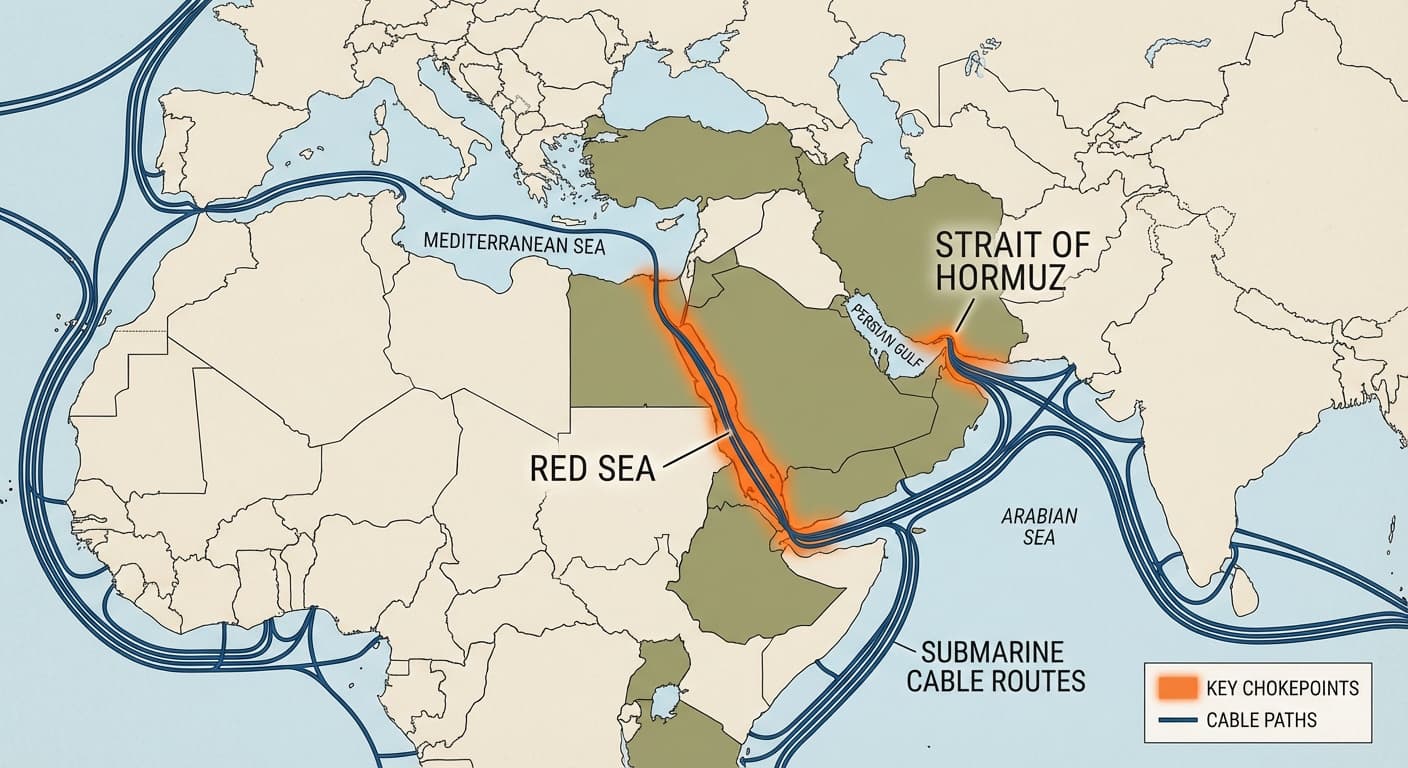
Beyond the direct conflict zones, the closure of both the Strait of Hormuz and the Red Sea to commercial traffic has disrupted submarine internet cables that carry the majority of data between Europe, Asia, and Africa. Seventeen submarine cables pass through the Red Sea alone. This has caused latency increases and service degradation for internet-based communications across a much wider region than the immediate conflict zone.
The Oil Price Connection: Why This Matters Beyond Calling
Brent crude oil has surged to nearly $120 per barrel — approaching the all-time high of $147 set in July 2008. The Strait of Hormuz, through which roughly one-fifth of the world's oil and liquefied natural gas normally flows, has seen crossings drop by more than 70%.
For most people reading this, the oil price spike means higher gas prices, rising food costs, and broader inflation. Goldman Sachs and Morgan Stanley have both published analyses warning of protracted economic impacts if the conflict continues.
But there is a less obvious connection to international calling: as economic pressure builds, immigrant and diaspora communities — the people most likely to need international calling services — are simultaneously facing higher living costs and an urgent, emotional need to reach family in affected regions. The financial squeeze and the communication need arrive at the same time.
This is precisely when affordable calling options matter most.
What Is Working Right Now to Reach the Middle East
Calling Real Phone Numbers (Landlines and Mobiles)
For reaching people in Iran specifically, traditional phone calls — to landlines and mobile numbers — are currently the most reliable method. Internet-based apps are largely non-functional inside Iran due to the blackout.
BoraPhone can connect calls to Iranian landlines and mobile numbers directly from your browser. Because the call routes through the international telephone network (not through the internet on the recipient's end), it bypasses the Iranian internet shutdown. The recipient's phone rings normally — no app or internet connection needed on their end.
Current status of calling to affected countries:
| Country | Phone calls (landline) | Phone calls (mobile) | WhatsApp/Telegram | Status |
|---|---|---|---|---|
| Iran | Intermittent | Intermittent | Non-functional | Severe disruption |
| UAE | Working | Working | Working (some delays) | Mostly functional |
| Lebanon | Working | Working | Working (quality varies) | Functional but strained |
| Iraq | Working | Working | Working | Functional |
| Bahrain | Working | Working | Working (some outages) | Mostly functional |
| Israel | Working | Working | Working | Functional |
Important note: Call success rates to Iran are lower than normal. Some calls may not connect on the first attempt. If a call does not go through, try again after 15–30 minutes. Landlines in major cities (Tehran, Isfahan, Shiraz) tend to connect more reliably than mobile numbers.
Tips for Reaching Family in Iran Right Now
Try landlines first. Mobile networks in Iran are under heavier strain than landline infrastructure. If your family member has a landline, try that number first.
Call during off-peak hours. Iranian peak phone hours are roughly 5–10 PM local time (IRST, UTC+3:30). Calling early morning Iran time (which is late evening in the US) may yield better connection rates.
Keep calls brief if you connect. Network capacity is limited. A short call confirming everyone's safety allows more people to get through. You can always call again later.
Have a backup plan. If calls to Iran are not connecting, try reaching your contact through a family member in a neighboring country (Turkey, UAE, Iraq) who may have better connectivity and can relay messages.
Use a VoIP service, not your carrier. US carrier international rates to Iran are extremely high — often $2–$5 per minute. During a crisis when you may need to make multiple attempts, VoIP services are dramatically more affordable. Check BoraPhone rates to Iran before calling.
What Telecoms Are Doing
Several telecom providers have responded to the crisis by waiving or reducing costs for calls to the Middle East. A Lithuanian telecom provider has made calls and SMS to Iran, Israel, the UAE, and other Middle Eastern countries free. A UK-based provider is crediting back costs for calls, SMS, and data to and from the UK to Bahrain, Iraq, Israel, Jordan, Kuwait, Lebanon, Oman, Palestine, Qatar, Saudi Arabia, and the UAE. An Australian provider has waived daily roaming fees in selected Middle Eastern destinations.
These gestures help, but they are temporary and geographically limited. If your carrier is not offering a waiver, VoIP services remain the most affordable option for sustained communication during the crisis.
How Oil Prices and the War Affect Everyday International Callers
The connection between oil prices and international calling may not be immediately obvious, but it is real.
Higher cost of living reduces discretionary spending. When gas prices rise and groceries cost more, immigrant families face difficult choices about where to spend their money. International calling — especially through expensive carrier rates — can feel like a luxury. Affordable VoIP options (rates starting at $0.02/min through BoraPhone) mean that staying connected does not have to compete with buying groceries.
Economic uncertainty drives emotional need for connection. During global crises, the desire to hear a loved one's voice intensifies. Call volumes to conflict-affected regions spike dramatically during events like this. Having a reliable, affordable calling method already set up means you are not scrambling when the need becomes urgent.
Telecom infrastructure investment slows. When submarine cables are damaged or routing paths disrupted, repairs and new investments slow down. This can affect call quality and reliability to affected regions for months or years after a conflict ends.
Setting Up Now for Ongoing Communication
If you have family or contacts in the Middle East and do not yet have an affordable international calling method in place, now is the time to set one up — before the next escalation or crisis makes communication even more difficult.
Step 1: Go to boraphone.com/signup and create an account with your email. It takes 30 seconds.
Step 2: Your first call is free — use it to test call quality and connectivity to the specific number you need to reach.
Step 3: Add credits (starting at $5) so you are ready to call whenever you need to. Credits do not expire, so there is no waste if the situation stabilizes.
Step 4: Save the BoraPhone rate calculator as a bookmark. Rates to conflict zones can change — checking before you dial ensures you always know the cost.
Because BoraPhone works in your browser, you do not need to install anything. This matters during a crisis — you can call from any computer, anywhere, without preparation.
A Note on Sensitivity
We recognize that for many readers, this is not an abstract geopolitical topic. It is deeply personal. People are worried about parents, siblings, children, and friends in a war zone. The inability to reach someone by phone during a conflict is a specific, terrible kind of anxiety.
This article is written to be practically useful — to help you find the methods that actually work right now. We will continue to update it as the situation evolves.
If you are struggling emotionally with the situation, please reach out to community organizations, mental health resources, or simply a friend who understands. You do not have to navigate this alone.
Frequently Asked Questions
Can I call Iran right now?
Yes, but with caveats. Iran's internet is effectively shut down, so WhatsApp and Telegram calls will not work. Traditional phone calls to Iranian landlines and mobile numbers are intermittently functional. Landlines in major cities have the highest success rate. Use a VoIP service like BoraPhone rather than your carrier to keep costs manageable during a time when you may need to make multiple call attempts.
Why isn't WhatsApp working to reach Iran?
Iran's internet connectivity has been reduced to approximately 1% of normal levels since late February 2026. WhatsApp, Telegram, and other internet-based calling apps require an active internet connection on both ends. With Iranian internet effectively offline, these apps cannot function for most people inside the country.
How do oil prices affect international calling?
Directly, they do not change calling rates. Indirectly, soaring oil prices raise the cost of living for everyone — including diaspora communities who regularly call family abroad. When household budgets tighten, having an affordable calling option (like VoIP at $0.02/min vs. carrier rates of $2–5/min) becomes much more important.
What is the cheapest way to call the Middle East right now?
Browser-based VoIP services like BoraPhone offer the lowest rates to Middle Eastern countries. Check the rate calculator for current pricing to your specific destination. Some carriers are temporarily waiving fees to the region — check with your provider.
Will the submarine cable disruptions affect my calls?
If you are using internet-based calling (WhatsApp, Telegram, Skype), submarine cable disruptions in the Red Sea and Strait of Hormuz may cause increased latency or reduced quality for calls routed through affected paths. Traditional phone calls and browser-based VoIP services that route through the telephone network are less affected by cable disruptions.
Last updated: March 24, 2026. This article will be updated as the situation develops. For current calling rates to any country, visit the BoraPhone rate calculator.

Written by
Serpius DentoSerpius works with communication and customer relations at BoraPhone. With hands-on experience helping users navigate international calling, he writes practical guides based on real conversations with customers worldwide.
Recent Posts
5 Minute Free Call: Where to Actually Get Free Minutes in 2026
Looking for a 5 minute free call online? Here is every service that gives you free calling minutes, how many you really get, and how to make a short free call to any country right now.
How to Call a Phone from Google: Every Option Explained
Can you call a phone number from Google? Yes, several ways: Google Voice, Google Meet, Assistant, and search. Here is how each works, what it costs, and what to use instead when Google says no.
How to Call Internationally Without an App (2026 Guide)
You do not need to download anything to call another country. Browser calling, direct dialing, calling cards, and roaming-free options compared, with real costs for each.