
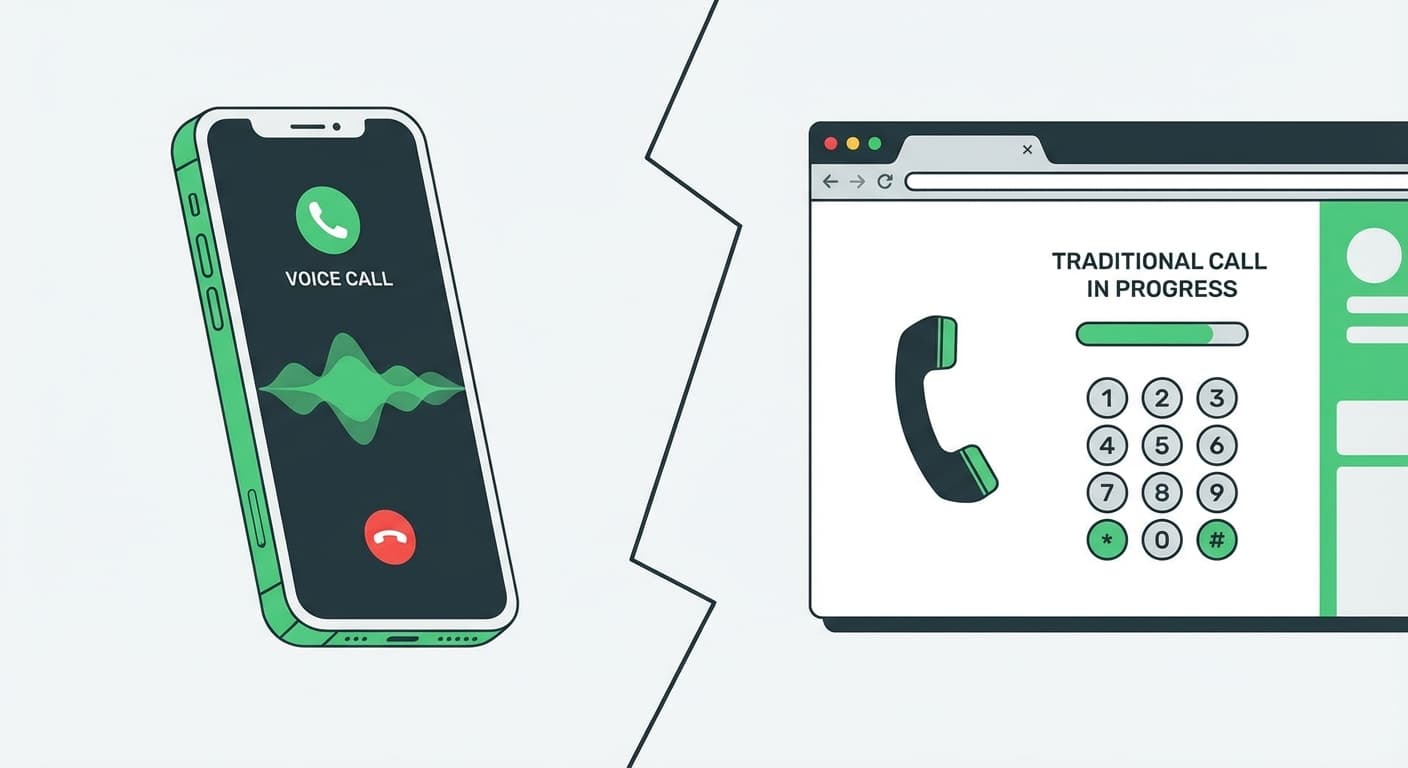
WhatsApp Calling vs Regular International Calls: Pros, Cons, Alternatives

WhatsApp has become the default way to call people overseas. It is free, it is familiar, and with over 2 billion users worldwide, most of the people you want to reach already have it installed. For many families separated by borders, WhatsApp voice calls are the primary lifeline.
But WhatsApp calling has real limitations that become obvious the moment you need to reach a landline, call a business, or deal with a spotty internet connection. This guide compares WhatsApp calls to traditional international calling methods and newer VoIP alternatives, so you can choose the right tool for each situation.
How WhatsApp Calling Works
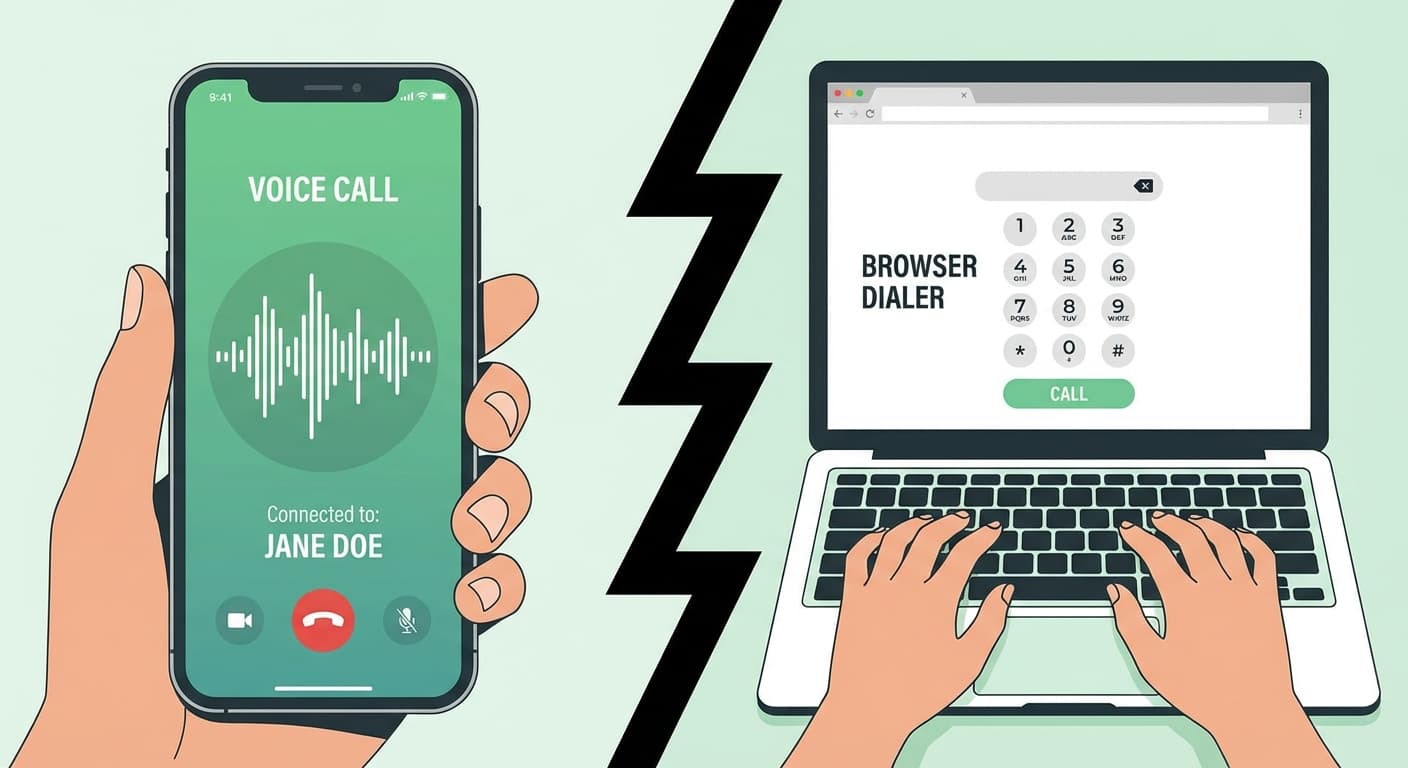
WhatsApp voice calls use your internet connection (WiFi or mobile data) to transmit audio between two devices. The call routes through WhatsApp's servers — not through any telephone network. This is why it is free: no telecom carrier is involved in the call.
When you place a WhatsApp call, the audio is end-to-end encrypted, meaning no one — including WhatsApp — can listen to the conversation. Quality depends on both parties' internet speed. On a solid 4G or WiFi connection, WhatsApp calls sound clear and stable. On 2G or congested networks, quality drops noticeably.
How Regular International Calls Work
A "regular" international call — whether from your mobile carrier or a VoIP service — routes through the international telephone network. Your voice travels from your phone or computer to your carrier, through international switching points, to the destination carrier in the other country, and finally to the recipient's phone.
This infrastructure costs money to operate, which is why international calls have per-minute charges. The advantage is reliability: the call reaches any phone number in the world — landline, mobile, business, government office — regardless of what apps the recipient has installed.
WhatsApp Calling: Pros and Cons
The Advantages
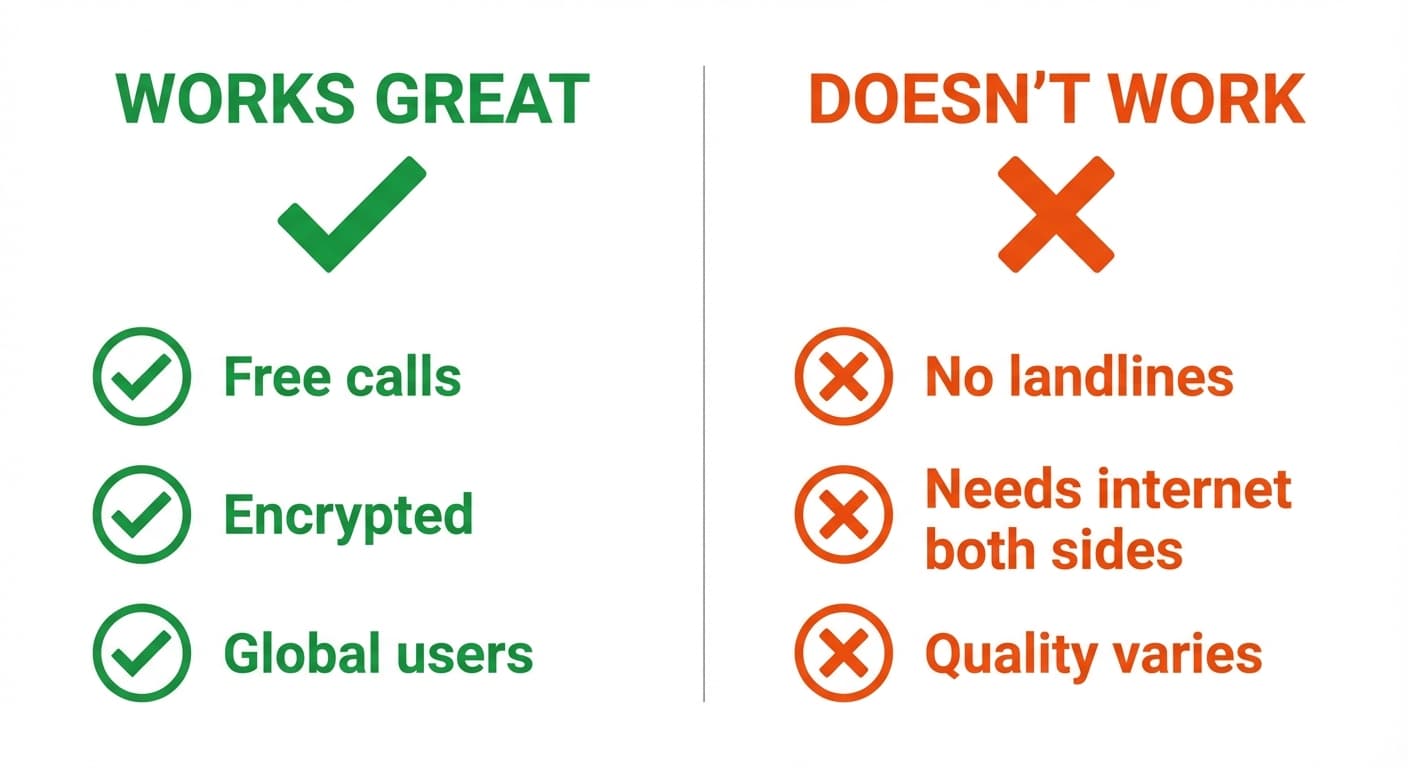
It is genuinely free. No per-minute charges, no subscriptions, no hidden fees. As long as both people have WhatsApp and internet access, the call costs nothing beyond your data plan.
Massive global reach. WhatsApp is the dominant messaging platform in most of Africa, South Asia, Latin America, and large parts of Europe. In countries like India, Brazil, and Nigeria, WhatsApp is effectively universal.
End-to-end encryption. WhatsApp calls are encrypted by default, providing strong privacy protection without any configuration.
Video calling included. You can switch between voice and video during a call at no additional cost.
Group calling. WhatsApp supports group voice calls with up to 32 participants.
The Limitations
You cannot call phone numbers. This is the fundamental limitation. WhatsApp can only call other WhatsApp users. If you need to reach a landline, a business phone line, a doctor's office, a hotel, a government agency, or any phone number where the person does not have WhatsApp, it simply does not work.
Both parties need internet. WhatsApp requires an active data or WiFi connection on both ends. If your grandmother's home does not have reliable internet, or if you are calling someone in a rural area with poor connectivity, the call may not connect or may have severe quality issues.
Quality is unpredictable. Because call quality depends on both internet connections, you have no control over half of the equation. A call might be crystal clear one day and choppy the next, depending on network congestion at the recipient's location.
No caller ID to non-users. If you are calling someone for professional reasons, WhatsApp does not provide a recognizable caller ID. The recipient sees your WhatsApp profile, not a phone number.
Data usage. WhatsApp voice calls use approximately 0.5–1 MB per minute. On metered connections or when traveling with limited data, a long call can consume significant data.
When WhatsApp Is Not Enough: The Alternatives
Browser-Based VoIP (Best for Reaching Any Phone Number)
When you need to call a real phone number overseas — and WhatsApp is not an option — browser-based VoIP fills the gap. BoraPhone lets you dial any landline or mobile number worldwide directly from your browser, with no app download required.
How it compares to WhatsApp:
| Factor | BoraPhone | |
|---|---|---|
| Cost | Free (app-to-app) | From $0.02/min |
| Reaches landlines | No | Yes |
| Reaches non-app users | No | Yes |
| Download required | Yes (app) | No (browser) |
| Both parties need internet | Yes | Only caller |
| Call quality control | Depends on both connections | Enterprise HD voice |
| Caller ID | WhatsApp profile | Real phone number |
| Encryption | End-to-end | Encrypted |
| Works from desktop | Limited (WhatsApp Web) | Yes (native browser) |
The practical combination: Many people use WhatsApp for personal calls to family and friends, then switch to BoraPhone when they need to reach a phone number that WhatsApp cannot dial. The two services complement each other well.
Your Mobile Carrier (Most Expensive Option)
Your carrier can connect you to any phone number in the world through traditional international dialing. The trade-off is cost: most US carriers charge $1–$3 per minute for international calls without a plan, or $10–$15/month for a reduced-rate add-on that still costs more than VoIP alternatives.
When carrier calling makes sense: Emergency situations where you need immediate voice connectivity and cannot use internet-based services. Otherwise, it is the most expensive way to call overseas.
Other Messaging Apps (Telegram, Signal, Viber)
These work similarly to WhatsApp — free calls between users of the same app. Each has advantages: Telegram works better on weak connections, Signal offers the strongest privacy guarantees, and Viber has a paid-out feature for calling real phone numbers (similar to Skype).
The same fundamental limitation applies: both people need the app.
Common Scenarios and Recommendations
"I call my parents in the Philippines every week."
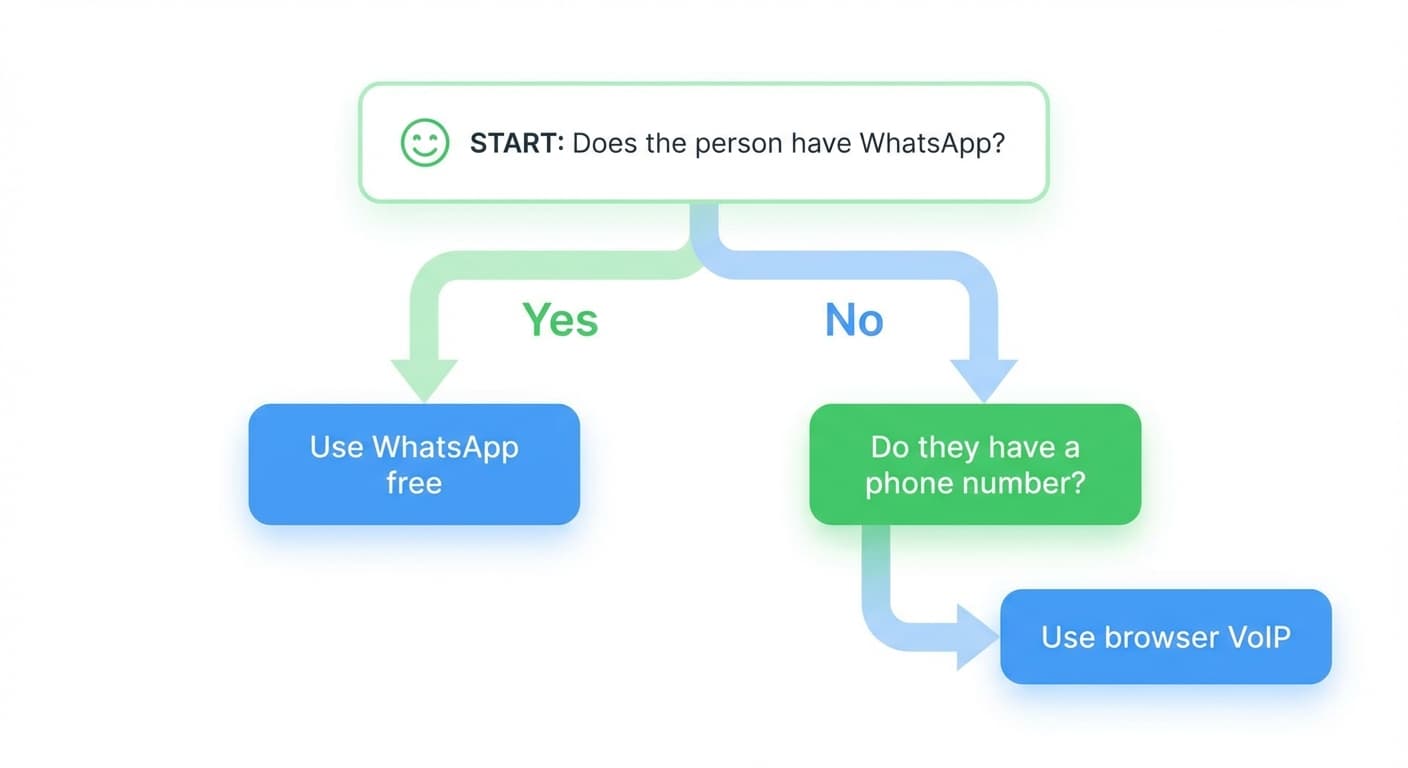
If your parents use WhatsApp and have WiFi at home, WhatsApp is the obvious choice — free and reliable. If they only have a landline or a basic phone without WhatsApp, use BoraPhone to call their number directly. Check rates to the Philippines on the calculator.
"I need to call a hotel overseas to confirm a reservation."
WhatsApp will not work here — hotels do not receive WhatsApp calls on their reservation line. Use BoraPhone to call the hotel's phone number directly from your browser. No download needed, and you will see the rate before you dial.
"WhatsApp calls keep breaking up when I call my family."
This is usually an internet quality issue on one or both ends. Two options: try calling at off-peak hours when network congestion is lower, or switch to a VoIP service like BoraPhone that only requires a good connection on your end (the call routes through the telephone network to the recipient's phone, so their internet speed does not matter).
"I am a freelancer and clients expect me to call their office number."
WhatsApp is not appropriate for calling business phone lines. Use BoraPhone for professional calls — the recipient sees a real caller ID, and you can call any landline or mobile number. The enterprise plan includes call recording and transcripts for documentation.
"I want the cheapest possible option to stay in touch overseas."
For people who use WhatsApp: WhatsApp is free and unbeatable on price. For reaching phone numbers: BoraPhone starts at $0.02/min with no subscription. A $5 credit purchase goes very far. Try the free first call to test quality.
The Future of International Calling
WhatsApp and similar apps have fundamentally changed how most people communicate across borders. For personal calls between people who both use smartphones and have internet access, the old model of per-minute international charges is essentially obsolete.
But the telephone network is not going anywhere. Businesses, government offices, healthcare providers, older family members, and anyone without reliable internet still rely on real phone numbers. The global telephone infrastructure serves billions of connections that messaging apps cannot reach.
The practical approach in 2026 is to use both: WhatsApp for free personal calls where it works, and a low-cost VoIP service like BoraPhone for everything else. Together, they cover virtually every international calling need at a fraction of what carriers charge.
Frequently Asked Questions
Does WhatsApp charge for international calls?
No. WhatsApp voice and video calls are free between WhatsApp users, regardless of location. The calls use your internet connection (WiFi or mobile data), so you may incur data charges from your internet provider, but WhatsApp itself charges nothing.
Can I call a landline using WhatsApp?
No. WhatsApp can only make calls to other WhatsApp users. To call a landline overseas, you need a service that connects to the telephone network, such as BoraPhone, your mobile carrier, or a calling card.
Is WhatsApp call quality as good as a regular phone call?
On a strong WiFi or 4G connection, WhatsApp call quality is comparable to a regular phone call. On slower connections (2G, 3G, congested WiFi), quality degrades noticeably. Regular phone calls through the carrier network tend to have more consistent quality because they do not depend on internet speed.
Does WhatsApp calling use a lot of data?
WhatsApp voice calls use approximately 0.5–1 MB per minute, or about 30–60 MB per hour. Video calls use significantly more — around 5 MB per minute. On an unlimited data plan, this is negligible. On metered or limited plans, longer calls can add up.
Last updated: June 2026. All information is based on publicly available data and independent testing. For current international calling rates, visit the BoraPhone rate calculator.

Written by
Serpius DentoSerpius works with communication and customer relations at BoraPhone. With hands-on experience helping users navigate international calling, he writes practical guides based on real conversations with customers worldwide.
Recent Posts
5 Minute Free Call: Where to Actually Get Free Minutes in 2026
Looking for a 5 minute free call online? Here is every service that gives you free calling minutes, how many you really get, and how to make a short free call to any country right now.
How to Call a Phone from Google: Every Option Explained
Can you call a phone number from Google? Yes, several ways: Google Voice, Google Meet, Assistant, and search. Here is how each works, what it costs, and what to use instead when Google says no.
How to Call Internationally Without an App (2026 Guide)
You do not need to download anything to call another country. Browser calling, direct dialing, calling cards, and roaming-free options compared, with real costs for each.