

How to Call US Toll-Free (800) Numbers From Outside the US — and Why It's Not Free

You are abroad, you need to reach a US airline, bank, insurer, or the IRS, and the only number they publish starts with 1-800. You dial it — and get a network error, a strange tone, or worse, a connected call that later shows up on your bill at a premium rate. This guide explains why that happens and gives you the routes that actually work.
Why "Toll-Free" Breaks the Moment You Leave the US
A toll-free number is not a normal phone number. It is a billing arrangement: the called company pays for the call, through a US carrier. That arrangement only exists inside the US phone system (plus Canada and a few NANP countries). When you dial 1-800 from a foreign network:
- Most carriers block the call outright — they have no way to bill the receiving company.
- Some carriers connect it and bill you — often at their standard or premium international rate. "Toll-free" quietly becomes toll-you.
- A few numbers simply don't route internationally at all, no matter who pays.
The prefixes all behave the same way:
| Prefix | Status from abroad |
|---|---|
| 800, 888, 877, 866, 855, 844, 833 | All US toll-free — same routing problem for all of them |
| +800 (no country code before it) | "UIFN" — international toll-free, works from some countries, but very few companies use it |
Route 1: Find the Company's Direct International Number
Almost every large US company runs a normal, direct-dial line for callers outside the US — they just do not advertise it. Where to look, in order:
- The "Contact us" page, filtered for "international" or "outside the US." Airlines and banks nearly always have one (we list the big banks' numbers in our card-blocked-abroad guide).
- The back of your card / your policy documents. Financial companies print direct-dial service numbers there precisely because 800 numbers fail abroad.
- Email or chat support first, and ask for "a direct-dial number reachable from outside the US." Agents have these on file.
A direct number looks like +1 followed by a normal area code (like +1 302 or +1 480). Those work from anywhere and cost whatever a normal call to the US costs on your service.
Route 2: Call the 800 Number Over the Internet
Here is the useful quirk: internet calling services route toll-free numbers through US infrastructure. When you dial 1-800-xxx-xxxx from a VoIP service, the call enters the US phone network domestically, so it usually connects exactly as if you were standing in Ohio.
With a browser-based service like BoraPhone, that means:
- You dial the 800 number from a browser tab, from any country.
- The call is billed as a normal call to the United States — from about $0.02 per minute — regardless of where you physically are.
- No SIM, no roaming, no app; a laptop on hotel WiFi is enough, and your first call is free.
An hour-long customer-service marathon costs a bit over a dollar. Compare that to carrier roaming at $1–3 per minute and the math ends the discussion. For the airlines-lost-my-bag class of problem, this is the sanest route we know, and it is why we built dialing this way — the how-it-works rundown on our homepage shows the whole flow.
One honest caveat: a small minority of toll-free numbers reject VoIP-originated calls. If one does, fall back to Route 1 — the direct international line.
Route 3: Collect Calls (Old, but Banks Still Honor Them)
For banks specifically, "call us collect" is still a real instruction — Bank of America, for example, publishes an international collect number for overseas customers. You place the call through an international operator and the company accepts the charges. The problem: operator-assisted calling barely exists on modern mobile plans, and hotel switchboards charge for the privilege. Treat collect as the fallback when routes 1 and 2 both fail.
Quick Reference: What To Do With Each Number Type
| You have… | Do this |
|---|---|
| 1-800 / 888 / 877 / 866 / 855 / 844 / 833 | Dial it over a VoIP/browser call at US rates, or find the company's direct +1 line |
| +800 xxxx xxxx (UIFN) | Try it as dialed — from some countries it connects free; otherwise treat as above |
| +1 with a normal area code | Dial from anywhere; costs a normal US-rate call |
| A number from a forum post | Verify it on the company's own site first — support-number scams are common |
The Two-Minute Setup Before Your Next Trip
The worst time to solve this problem is inside it — standing at a foreign airport with a cancelled flight and an unreachable 800 number. Before you travel:
- Note the direct international numbers for your bank, card issuer, and airline (from their own sites).
- Set up a browser calling account and make the free first call, so you know it works on your laptop. You can check what any call will cost in the rate calculator.
- If you expect to make regular calls home, skim our guide to the cheapest ways to call the US — the same logic applies to every toll-free call you will ever make from abroad.
"Toll-free" was designed for a world where everyone dialed from inside the US. You do not live in that world when you travel — but with the right routing, the calls still cost close to nothing.

Written by
Serpius DentoSerpius works with communication and customer relations at BoraPhone. With hands-on experience helping users navigate international calling, he writes practical guides based on real conversations with customers worldwide.
Recent Posts
5 Minute Free Call: Where to Actually Get Free Minutes in 2026
Looking for a 5 minute free call online? Here is every service that gives you free calling minutes, how many you really get, and how to make a short free call to any country right now.
How to Call a Phone from Google: Every Option Explained
Can you call a phone number from Google? Yes, several ways: Google Voice, Google Meet, Assistant, and search. Here is how each works, what it costs, and what to use instead when Google says no.
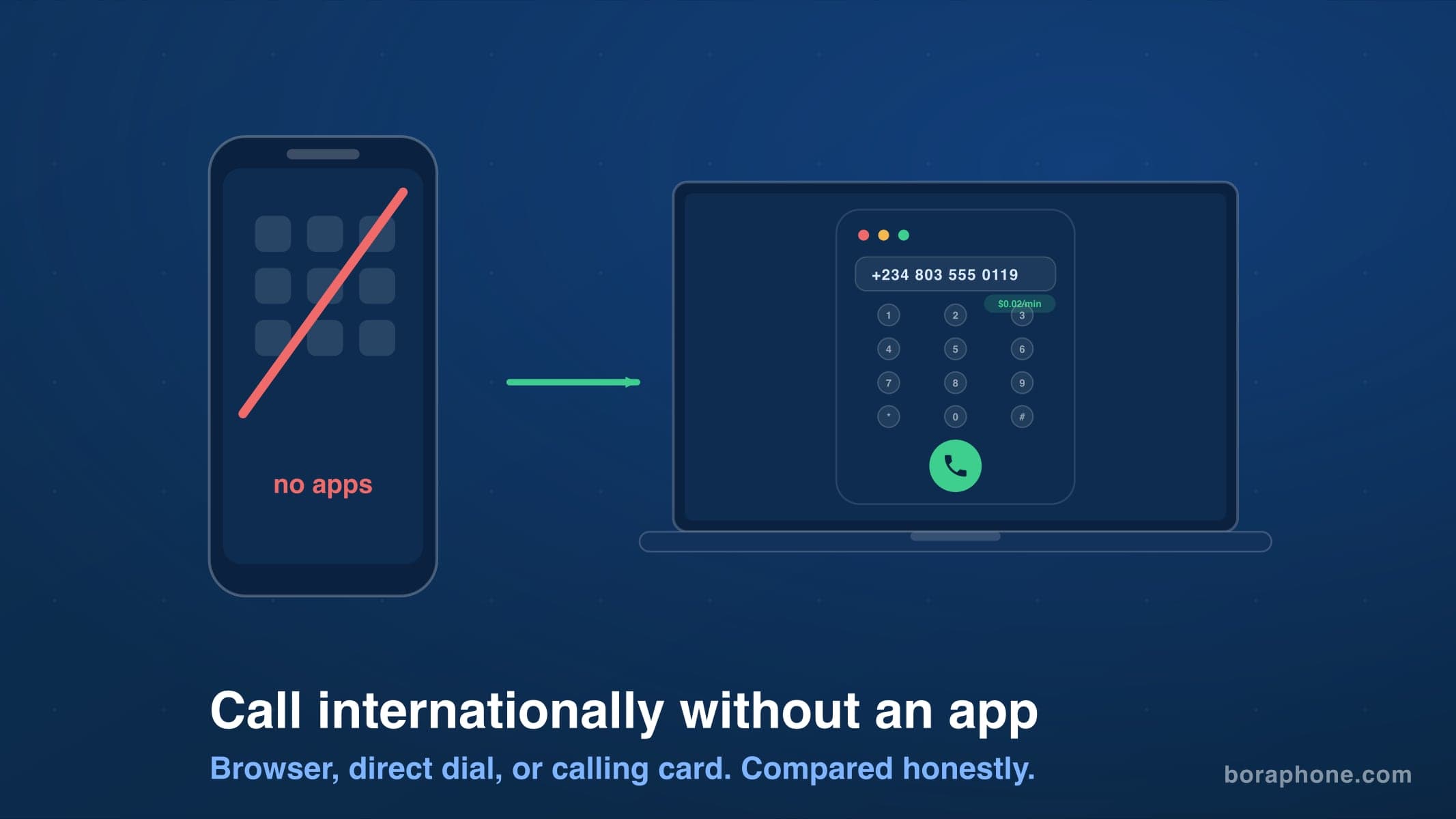
How to Call Internationally Without an App (2026 Guide)
You do not need to download anything to call another country. Browser calling, direct dialing, calling cards, and roaming-free options compared, with real costs for each.