
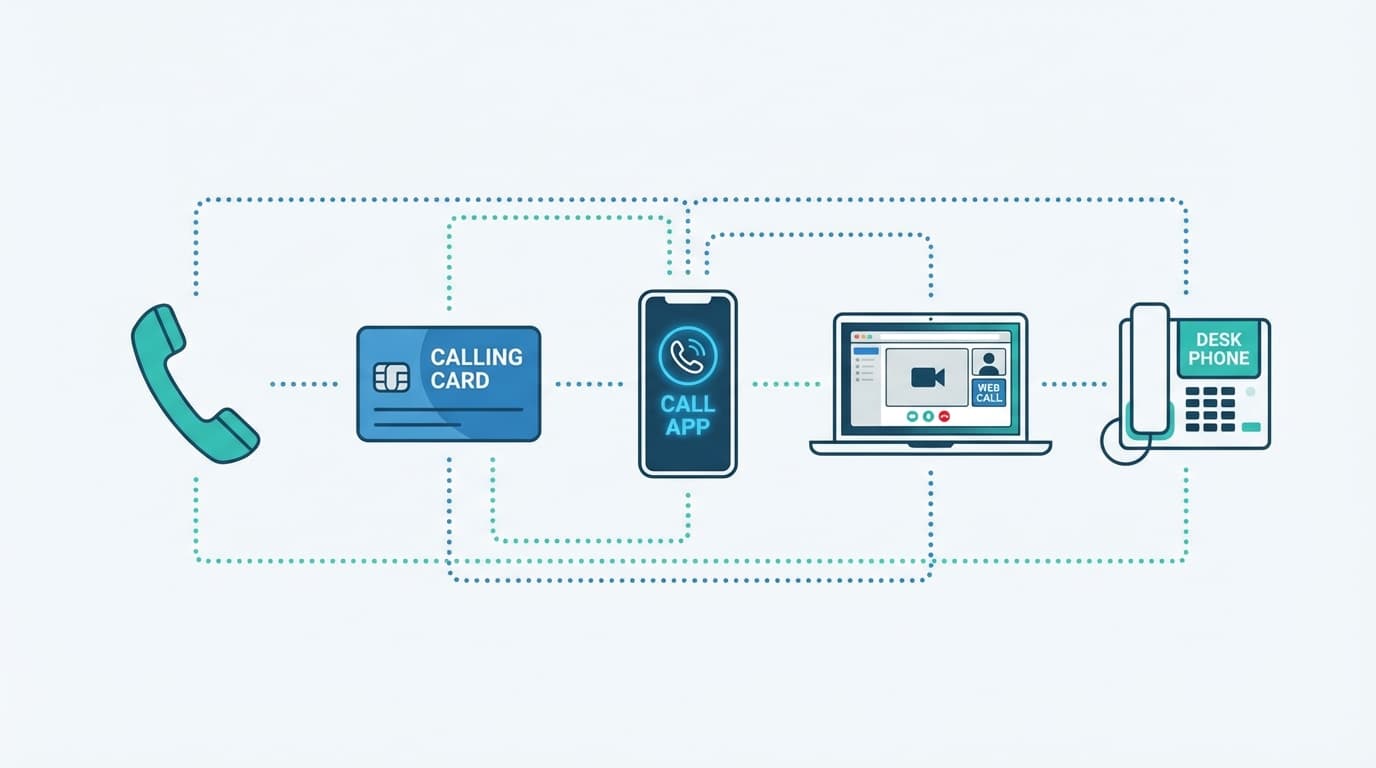
The Real Cost of 'Cheap' Calling Apps: Connection Fees, Rounding and Expiring Credit Compared

Two calling apps advertise the same destination at the same per-minute rate. On one of them, your 30-second call costs exactly one minute of that rate. On the other, the same call costs four times as much — after a connection fee, rounding, and the cut an app store took from your top-up. Headline rates are marketing; fee structure is the price. Here is the fine print, provider by provider, and how to audit any calling service in five minutes.
The Five Fees That Hide Behind a Cheap Rate
- Connection (setup) fees — a flat charge the moment a call connects, before any minutes. mytello, for example, applies a per-call setup fee of around 5¢ on its discounted routes; classic calling cards built their entire business on this.
- Billing increments (rounding) — per-second, per-minute, or worse. A 61-second call bills as 2 minutes on per-minute rounding, and as 3 minutes on the 3-minute increments some calling cards use.
- Credit expiry and inactivity freezes — Viber Out credit, per Viber's own support pages, freezes after 6 months without use; users of several apps report balances lost to inactivity clauses. And Skype's 2025 shutdown demonstrated the terminal version: Microsoft declined refunds for most remaining prepaid credit.
- Top-up and payment fees — BOSS Revolution introduced fees on top-ups (reported from ~$0.99); calling cards routinely charge "maintenance" fees weekly.
- App-store markups — top up inside an iOS app and the provider loses up to 30% to Apple, which some pass on: Yolla users have documented $4.99 in-app purchases crediting ~$4.00 of calling balance. Buying credit on the web, by card, dodges the entire category.
The Fee Table
What we could verify from providers' own pages and consistent user documentation, as of mid-2026 (structures change — always re-check before topping up):
| Provider | Connection fee | Billing increment | Credit expiry | Top-up quirks |
|---|---|---|---|---|
| mytello | ~5¢/call on many routes | Rounds up to full minutes | — | Web top-up |
| BOSS Revolution | None advertised | Per minute | — | Top-up fees reported (~$0.99+) |
| Viber Out | None | Per minute | Freezes after 6 months idle | App-store markups if bought in-app |
| Google Voice | None | Per minute | Idle-credit freezes reported | $10 minimum, US-only signup |
| Yolla | None | Per minute | Bundles: unused minutes don't roll over; welcome offers auto-convert to subscriptions | In-app purchases can credit less than paid |
| Calling cards (generic) | Common | Often 3-min increments | Common (30–90 days) | Weekly "maintenance" fees common |
| BoraPhone | None | Per minute, rounds up, 1-min minimum | No inactivity fees | Web/Stripe only — no app-store cut; min top-up $5, +5% bonus at $50, +10% at $100 |
Yes, we put ourselves in the table, and yes, honestly: BoraPhone bills per minute with partial minutes rounded up and a one-minute minimum — a 30-second call costs one minute at the shown rate. We think that trade (simple, predictable, zero fixed fees, rate always shown before dialing) is the right one, but it is a trade, and providers who hide theirs are the whole reason this article exists. The complete pricing policy is on our pricing page.
The Worked Example: a 30-Second Call to India
Say the headline rate to an Indian mobile is $0.08/min everywhere. Your cousin doesn't pick up properly, you talk for 30 seconds:
| Fee model | Math | Real cost | Effective rate |
|---|---|---|---|
| Per-minute, no fees (BoraPhone model) | 1 min × $0.08 | $0.08 | $0.16/min |
| Setup fee + per-minute (mytello model) | $0.05 + 1 min × $0.08 | $0.13 | $0.26/min |
| Calling card, 3-min increments + fees | 3 min × $0.08 + fees | $0.24+ | $0.48+/min |
Same advertised rate; 3× spread in reality. Short calls amplify fee structure — and most family calls include short ones ("call me back in ten minutes"). On genuinely expensive routes the effect is brutal, which is why our Cuba guide spends more words on fees than on rates.
The 5-Point Fee Audit (Run It on Any Provider)
Before the first top-up, find answers to these — if any answer is missing from the provider's site, assume the worst:
- "Is there a connection or setup fee?" Search their FAQ for "connection fee". Silence is not a no.
- "How do you round?" Per-second is rare and generous; per-minute is standard and fine; 3-minute increments are a red flag.
- "Does credit expire or freeze?" Look for "inactivity", "expiry", "validity" in the terms.
- "What do I actually receive for a $10 top-up?" Top up on the web, never in-app, and check the credited balance immediately.
- "What happens when a call fails?" A written refund policy ("100%, no questions asked" in BoraPhone's case) is the difference between a guarantee and a hope.
The Takeaway
The cheapest calling service is not the one with the lowest number on the landing page — it is the one whose total for your actual calling pattern is lowest, and whose failure modes (expiry, freezes, shutdowns) cannot eat your balance. Compare fee structures once, top up small, and keep receipts. And if you want the version of this comparison across whole categories — carriers vs apps vs browser calling — start with our full cost comparison, then check your destination's live rate in the calculator.

Written by
Serpius DentoSerpius works with communication and customer relations at BoraPhone. With hands-on experience helping users navigate international calling, he writes practical guides based on real conversations with customers worldwide.
Recent Posts
5 Minute Free Call: Where to Actually Get Free Minutes in 2026
Looking for a 5 minute free call online? Here is every service that gives you free calling minutes, how many you really get, and how to make a short free call to any country right now.
How to Call a Phone from Google: Every Option Explained
Can you call a phone number from Google? Yes, several ways: Google Voice, Google Meet, Assistant, and search. Here is how each works, what it costs, and what to use instead when Google says no.
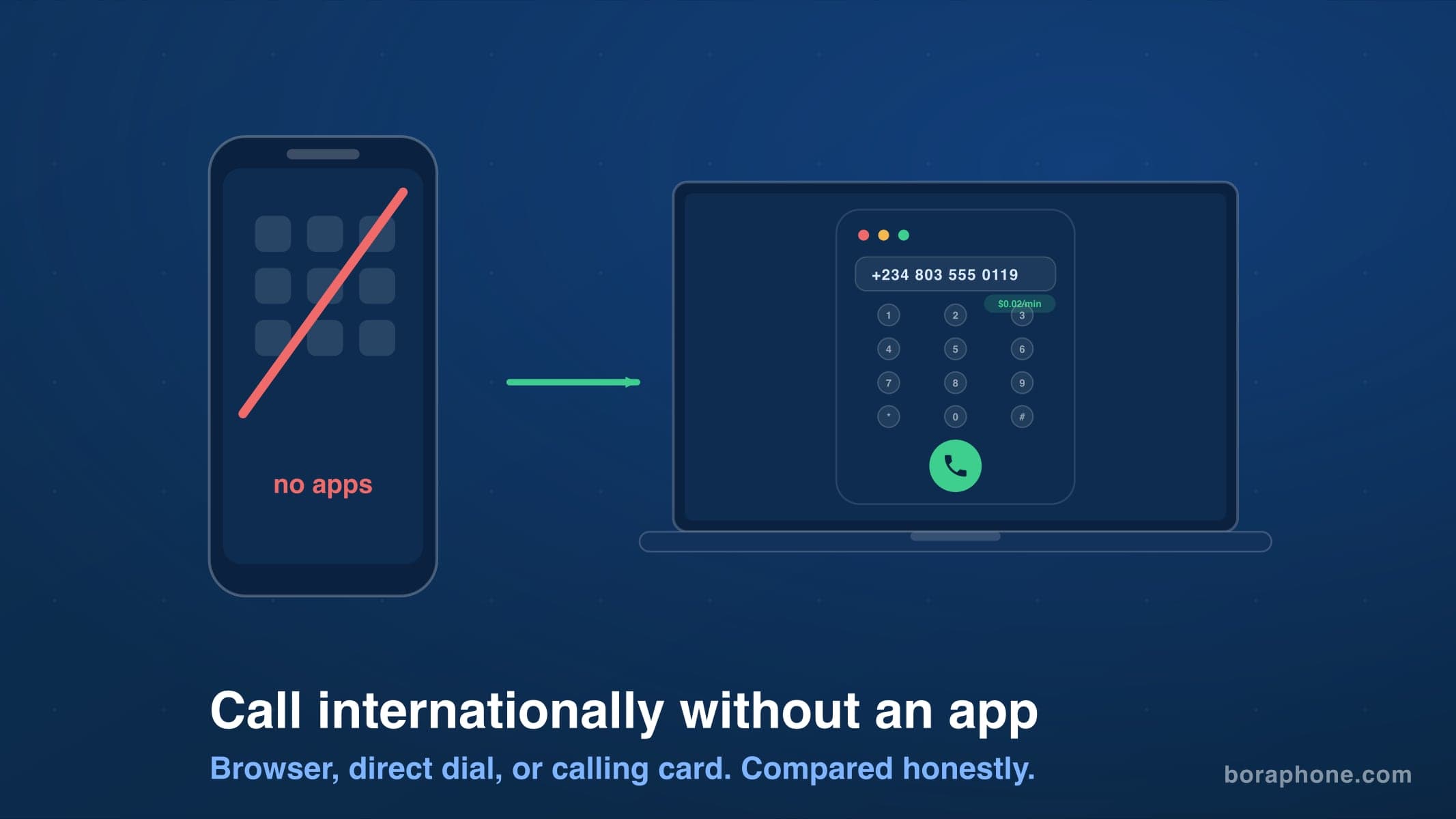
How to Call Internationally Without an App (2026 Guide)
You do not need to download anything to call another country. Browser calling, direct dialing, calling cards, and roaming-free options compared, with real costs for each.