
7 Ways to Make Free International Calls in 2026

Most guides about free international calls bury the truth: very few methods are actually free when you need to reach a real phone number. Apps like WhatsApp and FaceTime only work when both people are online and using the same app. The moment you need to dial a landline in Lagos or a mobile number in Manila, "free" disappears.
We spent three weeks testing every popular method for making international calls without paying full carrier rates. Below are the seven approaches that genuinely work in 2026, ranked from completely free to nearly free, with honest notes on where each one falls short.
1. App-to-App Calling (WhatsApp, FaceTime, Telegram)
Cost: Completely free (app-to-app only)
If the person you are calling also uses the same app and has a stable internet connection, app-to-app calling costs nothing beyond your existing data plan. WhatsApp has over two billion users globally, making it the most universally accessible option. FaceTime delivers excellent audio quality but is limited to Apple devices. Telegram works well on weaker connections and across desktop and mobile.
Where it falls short: You cannot reach landlines, business numbers, or anyone who does not have the app installed. Call quality depends entirely on both parties' internet speed. There is no caller ID for the recipient, and if you are calling a business or government office, this method simply will not work.
Best for: Staying in touch with family and friends who already use the same messaging app.
2. Browser-Based VoIP Services
Cost: Free first call, then from $0.02/minute
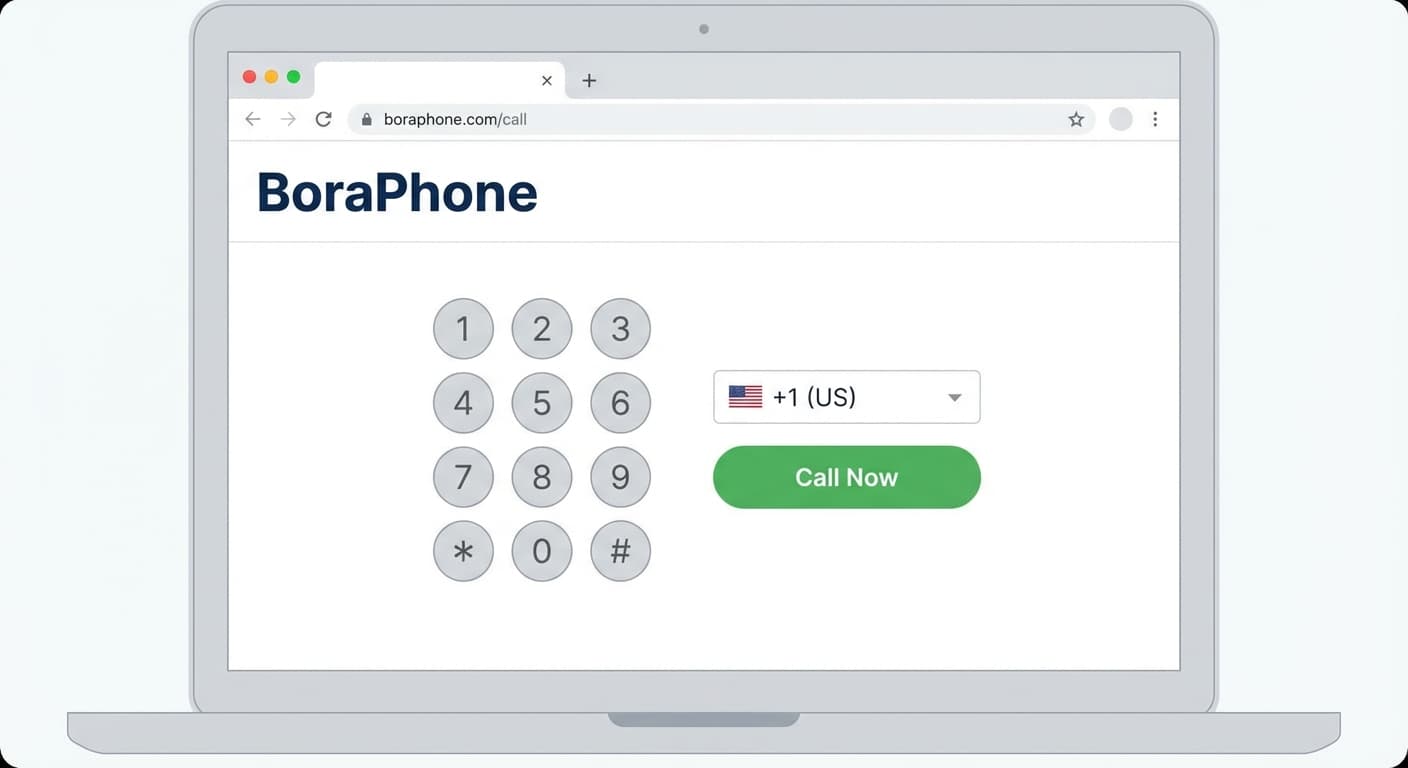
Browser-based calling has become the fastest-growing category in international communication. Instead of downloading software, you open a browser tab, enter a phone number, and call directly to any landline or mobile number worldwide.
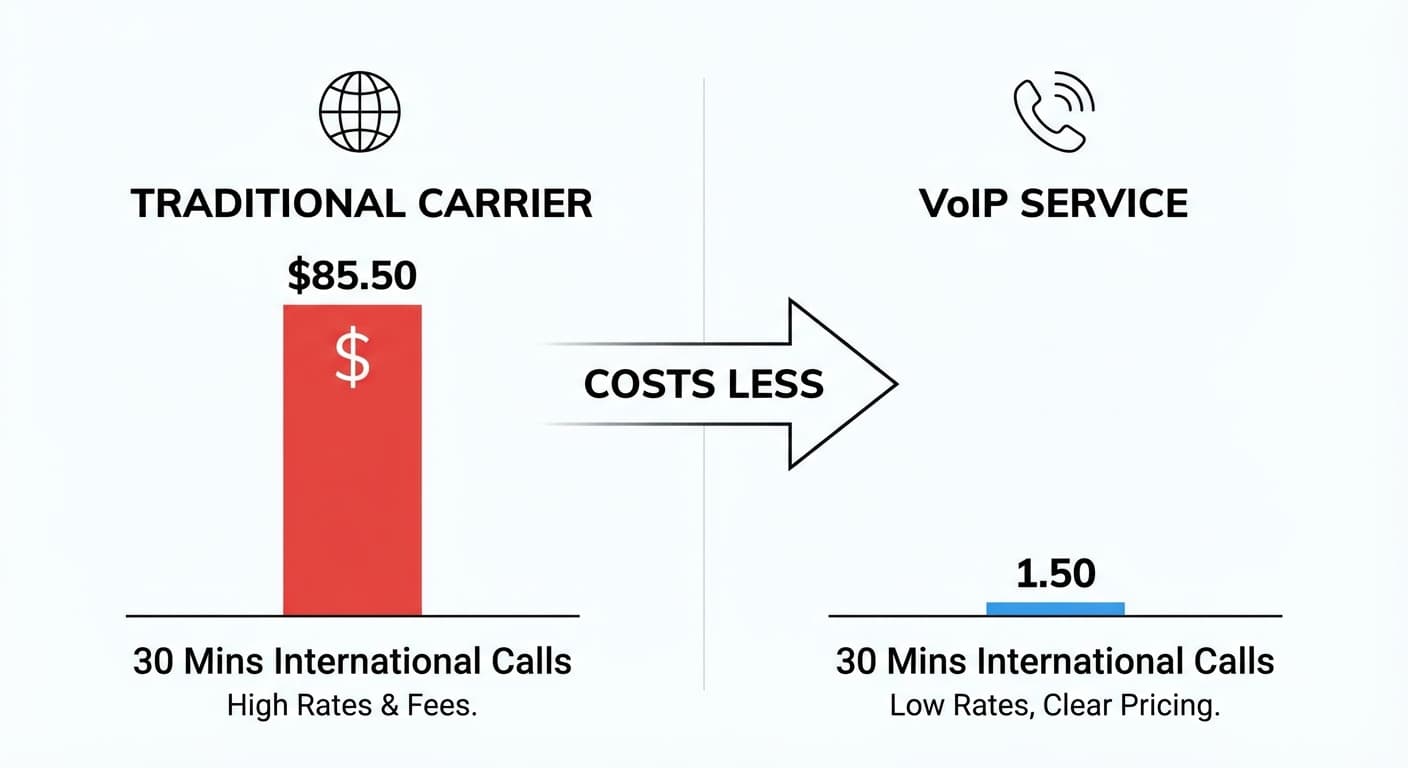
BoraPhone is the standout option here. Setup takes about 30 seconds: sign up with an email, add credits starting at $5, and dial. The rate calculator shows exact per-minute costs before you connect, so there are no surprises. Rates start at $0.02 per minute depending on the destination, which works out to roughly 80 times cheaper than what most US carriers charge for international calls.
What makes this practical: No app to download or update. Works on any device with a browser: laptop, tablet, or phone. You get a real caller ID, and the person you are calling does not need any special software. BoraPhone also offers a free first call so you can test the quality before committing any money.
Where it falls short: It is not completely free after the trial call. You need an internet connection, though even hotel WiFi is typically sufficient.
Best for: Anyone who needs to call real phone numbers abroad, especially from a computer. If you work remotely or travel frequently, this is the most friction-free option available. We cover the full setup, including Phone Link and Mac options, in our guide to making phone calls from your computer, and we tested the free ad-supported sites separately in our free calling websites roundup.
3. Google Voice
Cost: Free to US and Canada, paid internationally
Google Voice gives you a free US phone number and allows unlimited calling to US and Canadian numbers at no charge. For international calls, rates vary by country but are generally competitive, though not as low as dedicated VoIP services.
Where it falls short: Google Voice is only available to US-based users. International rates, while reasonable, are higher than specialized services like BoraPhone for most destinations. The interface has not been significantly updated in years, and call quality to some regions can be inconsistent. You also need a Google account and an existing US phone number to sign up.
Best for: US residents who primarily call domestically but occasionally need to reach international numbers.
4. Skype Credit and Skype-to-Skype
Cost: Free (Skype-to-Skype), from $0.02/minute to phones
Skype was the original VoIP calling app, and it still works. Skype-to-Skype calls are free, and calling real phone numbers requires purchasing Skype Credit or a subscription. Microsoft has continued maintaining the platform, though it receives fewer updates than it once did.
Where it falls short: Skype requires a desktop application or mobile app download. The app has become bloated over the years, and many users report slow startup times and interface clutter. The user base has declined significantly as WhatsApp and other messaging apps have taken over. For calling real phone numbers, rates are comparable to BoraPhone but the experience is less streamlined.
Best for: Users who already have Skype contacts and want to make occasional calls to phone numbers abroad.
5. Calling Card Services and Apps
Cost: From $0.01/minute (plus connection fees)
Calling cards, both physical and digital, have been around for decades and still serve a purpose. Modern calling card apps like Boss Revolution and NobelApp offer competitive per-minute rates, especially to high-traffic corridors like US-to-India or US-to-Mexico.
Where it falls short: The advertised per-minute rate rarely tells the full story. Most calling cards charge connection fees ($0.50–$1.00 per call), maintenance fees if you do not use the card regularly, and rounding penalties that bill in 3-minute increments. A "1-cent-per-minute" card can easily cost $0.15–$0.20 per minute in practice. The experience also tends to be clunky: dial an access number, enter a PIN, then dial the international number.
Best for: Budget-conscious callers making long calls to popular destinations who do not mind the multi-step dialing process.
6. Carrier International Plans and Add-Ons
Cost: $5–$15/month for an add-on package
AT&T, T-Mobile, and Verizon all offer international calling add-ons that reduce per-minute rates from their standard $1–$3/minute to something more reasonable. T-Mobile's international plans, for example, include unlimited texting and data in 215+ countries with their Magenta plans, though voice calls still cost $0.25/minute.
Where it falls short: Even with add-ons, per-minute rates are significantly higher than VoIP alternatives. You are also locked into your carrier's supported countries and rate structure, with little transparency about what you will actually pay until the bill arrives. These plans make sense only if you make very few international calls and want the convenience of dialing directly from your phone app.
Best for: People who make occasional short international calls and prefer not to use any additional service or app.
7. Free Trial Credits from VoIP Providers
Cost: Free (limited minutes or first call)
Several VoIP providers offer free trial calls or signup credits to let you test their service. BoraPhone offers a free first call with no credit card required. Just sign up with your email and dial. PopTox and iEvaphone offer web-based free calls with shorter time limits and frequent ads.
Where it falls short: Free trials are inherently limited. Ad-supported "free" calling services often have poor call quality, aggressive advertising, and restrictions on which countries you can call. They work as a way to test a service before buying credits, but they are not a sustainable long-term solution.
Best for: Testing call quality to a specific country before committing to a paid service. If you are specifically hunting for a short free call right now, our 5 minute free call guide maps out exactly how many free minutes each service really gives.
Quick Comparison Table
| Method | Cost | Reach Landlines? | Need an App? | Call Quality |
|---|---|---|---|---|
| App-to-App (WhatsApp) | Free | No | Yes | Good (depends on WiFi) |
| Browser VoIP (BoraPhone) | From $0.02/min | Yes | No | HD quality |
| Google Voice | Free to US/CA | Yes (paid intl) | Yes | Variable |
| Skype | Free (Skype-to-Skype) | Yes (paid) | Yes | Good |
| Calling Cards | From $0.01/min + fees | Yes | Varies | Variable |
| Carrier Add-Ons | $5–$15/month | Yes | No | Carrier-grade |
| Free Trials | Free (limited) | Yes | Varies | Variable |
So Which Method Should You Actually Use?
It depends on who you are calling and how often.
If both you and the person you are calling use WhatsApp or FaceTime, app-to-app calling is the obvious choice, because it is genuinely free and the quality is good on a decent connection.
If you need to reach a real phone number, whether a landline, a business, or a mobile number where the person does not use messaging apps, browser-based VoIP is the most practical option in 2026. BoraPhone stands out because there is nothing to download, the rates are transparent, and you can see exactly what a call will cost before you dial using the rate calculator.
For US residents who mostly call domestically, Google Voice remains a solid free option with occasional international use.
The honest truth: completely free international calling to any phone number does not exist without trade-offs. But getting close to free, with rates starting at two cents per minute, is entirely achievable in 2026.
Frequently Asked Questions
Can I really make international calls for free?
Yes, but only app-to-app. Services like WhatsApp, FaceTime, and Telegram allow free voice calls to other users of the same app. To call a regular phone number (landline or mobile) internationally, you will need a paid service, though rates can be as low as $0.02 per minute with browser-based VoIP services.
What is the cheapest way to call international phone numbers?
Browser-based VoIP services currently offer the lowest per-minute rates for calling real phone numbers abroad. BoraPhone starts at $0.02/minute with no connection fees or subscriptions. Check the rate calculator for exact pricing to your destination.
Do I need to download an app to make cheap international calls?
Not necessarily. Browser-based services like BoraPhone work entirely in your web browser, with no downloads and no installations. Just open a tab and dial. This is especially convenient if you are calling from a work computer or a device where you cannot install apps.
Is the call quality good on free international calling services?
Call quality varies significantly. App-to-app calls (WhatsApp, FaceTime) depend on both parties' internet speed. Carrier calls offer consistent quality but at high prices. Browser-based VoIP services like BoraPhone use enterprise-grade infrastructure with HD voice, offering a good balance of quality and affordability.
Are free international calling apps safe to use?
Major apps like WhatsApp and FaceTime use end-to-end encryption. For VoIP services, look for providers that explicitly mention encryption. BoraPhone encrypts all calls by default. Be cautious with ad-supported "free" calling sites, as they may collect and sell your data.
How do I compare paid calling services once free options run out?
Compare on the destination you actually call, using the mobile rate rather than the landline rate, then add connection fees and billing rounding before deciding. Headline "from $0.01/min" prices are not comparable across providers because each quotes its own cheapest route. Our VoIP rate comparison walks through how to do this in about five minutes.
Last updated: July 2026. Rates and features are accurate as of publication and may change. We independently test all services mentioned in this guide.

Written by
Serpius DentoSerpius works with communication and customer relations at BoraPhone. With hands-on experience helping users navigate international calling, he writes practical guides based on real conversations with customers worldwide.
Recent Posts
5 Minute Free Call: Where to Actually Get Free Minutes in 2026
Looking for a 5 minute free call online? Here is every service that gives you free calling minutes, how many you really get, and how to make a short free call to any country right now.
How to Call a Phone from Google: Every Option Explained
Can you call a phone number from Google? Yes, several ways: Google Voice, Google Meet, Assistant, and search. Here is how each works, what it costs, and what to use instead when Google says no.
How to Call Internationally Without an App (2026 Guide)
You do not need to download anything to call another country. Browser calling, direct dialing, calling cards, and roaming-free options compared, with real costs for each.